
More and more treatments can be given at home, and many of them include an injection: heparin after an operation, insulin, other medicines prescribed by your doctor. Many people find the first time daunting, and that is normal. I will explain what matters.
An important clarification: an injection is a medicine and the regimen is set by your doctor. The dose, the timing and the duration are not changed on your own.
Before you inject, always check the same things
- That it is the right medicine and the dose you have been prescribed.
- That it is the right time.
- That the packaging is in good condition and has not expired.
- That you have all the material to hand: syringe, cotton wool or gauze, antiseptic and a container for the used needle.
And wash your hands with soap and water (or with alcohol gel) before you start.
How to give a subcutaneous injection
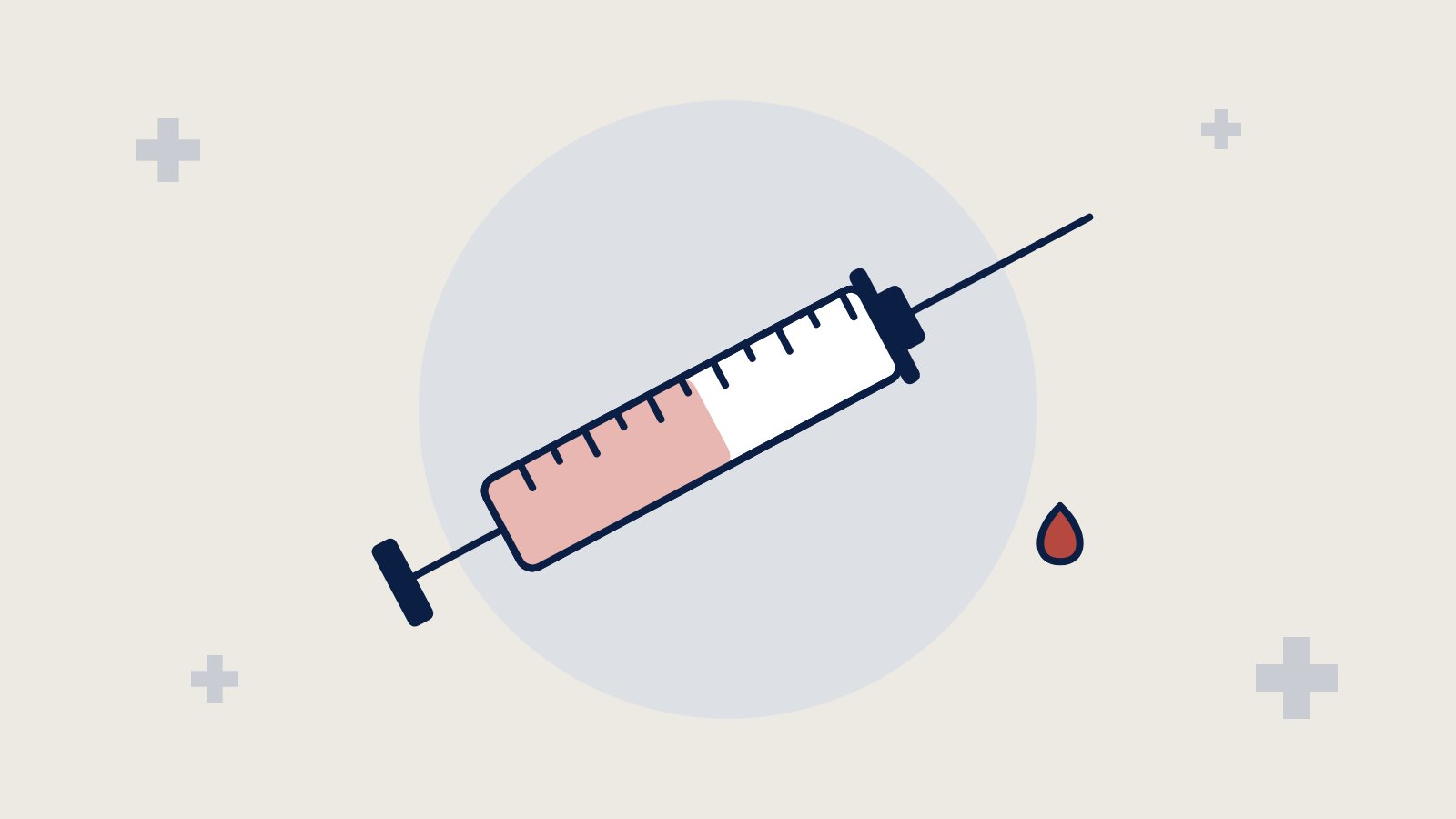
The subcutaneous route is the one used for heparin or insulin: it is injected just under the skin, with a very small needle. As an example, these are the usual steps with a pre-filled heparin syringe:
- Make yourself comfortable, sitting or leaning back.
- Disinfect the area and let it dry.
- Remove the cap and pinch a fold of skin with two fingers.
- Insert the needle at a right angle, in one go.
- Do not purge the air bubble in pre-filled heparin syringes: it is part of the dose.
- Inject slowly, over about 15 seconds.
- Wait about 5 seconds before withdrawing the needle, then release the fold.
- Do not rub or massage the area: it can cause a bruise. If it bleeds, press with a gauze pad.
This applies to heparin. Other medicines may need a different technique, so always follow what you have been taught for yours.
Where to inject and how to rotate sites
- Abdomen, more than 5 cm from the navel, is the usual site.
- Outer thigh, as an alternative.
- Alternate sides with each dose and leave about two fingers’ width between injections.
- Avoid areas with scars, bruises or moles, or that are reddened or hardened.
What to watch for
A small bruise at the injection site is common with heparin. But if you take an anticoagulant, any bleeding that does not stop (from the nose, gums or urine) is a reason to seek advice.
Always tell whoever is going to treat you that you are on heparin, especially before an operation, a tooth extraction or a colonoscopy.
Seek advice if…
- There is bleeding that does not stop on its own.
- The injection site is increasingly red, hot, hard or painful.
- You have forgotten a dose or cannot remember whether you took it: do not take two to make up for it, and ask what to do.
- If you are unsure about the medicine, the dose or the timing.
Used needles: handle with care
- Put the used needle in a sharps container as soon as you have used it. You can ask for one at the health centre, the hospital or the pharmacy.
- If you do not have one to hand, some people use a hard plastic container with a lid. It is a temporary solution.
- Keep it out of the reach of children and pets.
- When it is three-quarters full, take it to the collection point indicated by your health centre or your local council.
- Do not throw loose needles in the bin.
When a home nurse can help you
Some people give themselves the injection without any problem, and others prefer someone else to do it. When you cannot, you are afraid, or the person who needs it is an older relative, I can come to your home. I give the prescribed medication and, if you want to learn, I teach you the technique calmly so that you can do it safely.
The doctor’s regimen is needed, with the medicine, the dose and the timing.
Frequently asked questions
Does it hurt?
Subcutaneous needles are very fine. You feel a brief pinch. Injecting slowly and waiting a few seconds before withdrawing the needle helps.
Can I do it myself?
Yes, in many cases. It is best if a nurse teaches you the technique first.
Why should you not rub the area afterwards?
Because it can cause bruising or irritation in the area.
Do I need a prescription?
You need the doctor’s regimen. No medication is given without it.
What should I do with the needles?
Use a sharps container, keep it out of the reach of children, and take it to the collection point when it is full.
Sources
- Hospital Clínico San Carlos (Community of Madrid). Self-administration of subcutaneous heparin (2021). comunidad.madrid
- Escuela de Pacientes, Sacyl (Junta de Castilla y León). Low molecular weight heparin (LMWH). saludcastillayleon.es
- FDA. The best way to dispose of used needles and other sharps. fda.gov
Informational content. It does not replace the assessment of a healthcare professional or a medical consultation.
Last reviewed: 29 October 2026
See the service