
People increasingly talk about “getting a drip” as if it were harmless, almost a treat. It is not. IV therapy is a medical treatment: it goes straight into the blood, which is why it requires a medical indication, sterile equipment and monitoring. I will explain when it makes sense, what care it needs and which signs should put you on your guard.
What IV therapy is
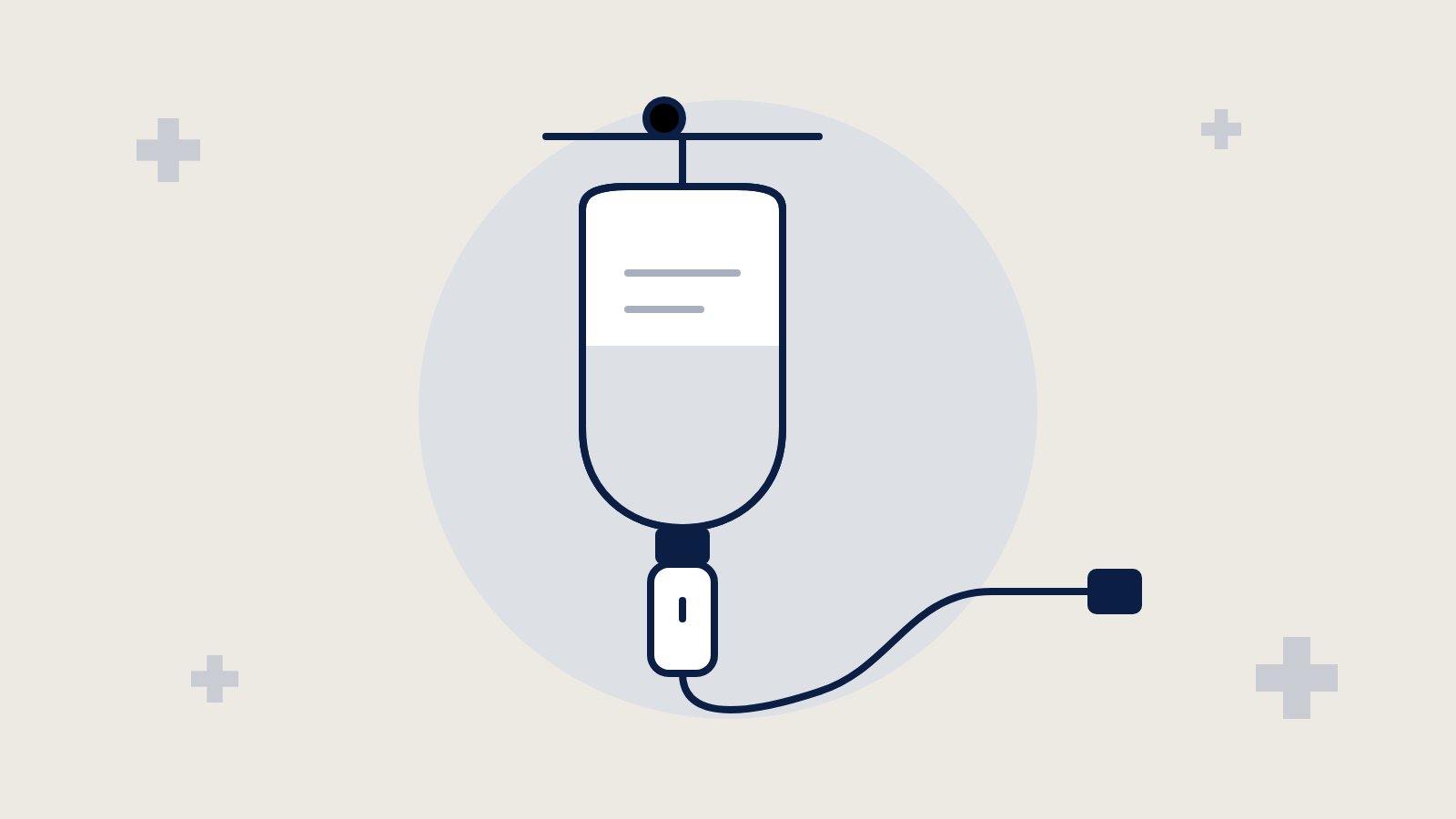
It means giving fluids or medication directly into a vein, usually through a fine catheter placed in the arm or hand. It is used when the oral route is not enough or cannot be used, or when the effect needs to be faster.
When a doctor prescribes it
There are situations in which the intravenous route makes sense, always after an assessment and with a prescription:
- Significant dehydration.
- Persistent vomiting and diarrhoea that prevent drinking or eating.
- Diagnosed nutritional deficiencies.
- Intestinal absorption problems.
- Prescribed treatments given by this route (for example, certain antibiotics).
In these cases, part of the treatment can continue at home, with a nurse, once the doctor has decided on it.
What it is not
The so-called “detox”, “energy” or “immunity” drips advertised without a diagnosis have no scientific support in healthy people: the liver and kidneys already remove what is left over. The medical institutions quoted in the press, such as the US NIH, remind us that intravenous vitamins should be limited to specific medical indications.
And it carries real risks: blood infection if sterility is not maintained, inflammation of the vein (phlebitis), salt imbalances that can affect the heart, severe allergic reactions or kidney problems. In April 2026, in Hermosillo (Mexico), several deaths were investigated after vitamin drips were given at a clinic; the causes were not yet confirmed when this information was published. I mention it not to frighten you, but because it explains why this is not done lightly.
Signs that a service cannot be trusted
- It offers you immediate results with no prior assessment.
- It does not ask for your medical history, medication or allergies.
- It does not ask for a prescription or record what has been given.
- It offers “personalised” mixtures or products with no health registration.
- It advertises it as a treat, not as a treatment.
How I work
I only give IV therapy with a medical prescription and after an assessment. That includes checking your history and allergies, working with sterile equipment and medication of registered origin, monitoring you during the infusion and recording what is done.
If there is no medical indication, it is not done. That is not negotiable.
If you have a line at home: what to watch for
If a catheter is left in place after a medical assessment, these are the basic care steps and the signs you should know.
- Check the insertion site every day. The dressing must be clean, dry and well stuck down. If it gets wet, lifts or becomes dirty, it has to be changed.
- Do not touch it with dirty hands or handle it.
- Protect it when you shower, following the instructions you have been given.
- The catheter is not left in indefinitely: whoever treats you decides when it is changed or removed.
Tell us if you notice:
- Swelling, redness, heat or pain around the catheter or along the vein.
- A change in the drip rate.
- Fluid leaking from the puncture site, or the feeling that fluid is escaping into the tissue (extravasation).
- The catheter moves or comes out.
With these signs, the infusion is stopped and whoever treats you is told. The line is usually removed and the area is monitored.
Call 112 if…
- During or after the infusion you develop shortness of breath, swelling of the face or lips, or widespread hives.
- There is severe dizziness, fainting or chest pain.
- A high fever with chills appears.
Frequently asked questions
Do I need a prescription for a drip?
Yes, a medical indication and prescription are required. Without them, it is not given.
Can a drip be given at home?
When a doctor indicates it and a healthcare professional does it with the right equipment, it can be an option.
Does a drip work to “boost energy” or “detoxify”?
There is no evidence that it works in healthy people. It is better to look into the real reason for the tiredness.
What risks does it have?
Infection, phlebitis, electrolyte imbalances, allergic reactions and kidney problems, especially without an assessment or monitoring.
How long does a line last?
It depends on the case. The professional monitoring it decides when to change or remove it.
Sources
- El Universal (Cartagena). What lies behind IV drip therapy: risks and realities of a dangerous trend (6 Apr 2026). Press: quotes the NIH, Mayo Clinic, ACMT and a toxicologist. eluniversal.com.co
- Enfermería en Cardiología (AEEC), no. 51-52. Study on complications of peripheral venous catheters, Complejo Hospitalario Universitario de Albacete (2010). dialnet.unirioja.es
Informational content. It does not replace the assessment of a healthcare professional or a medical consultation.
Last reviewed: 29 October 2026
See the service